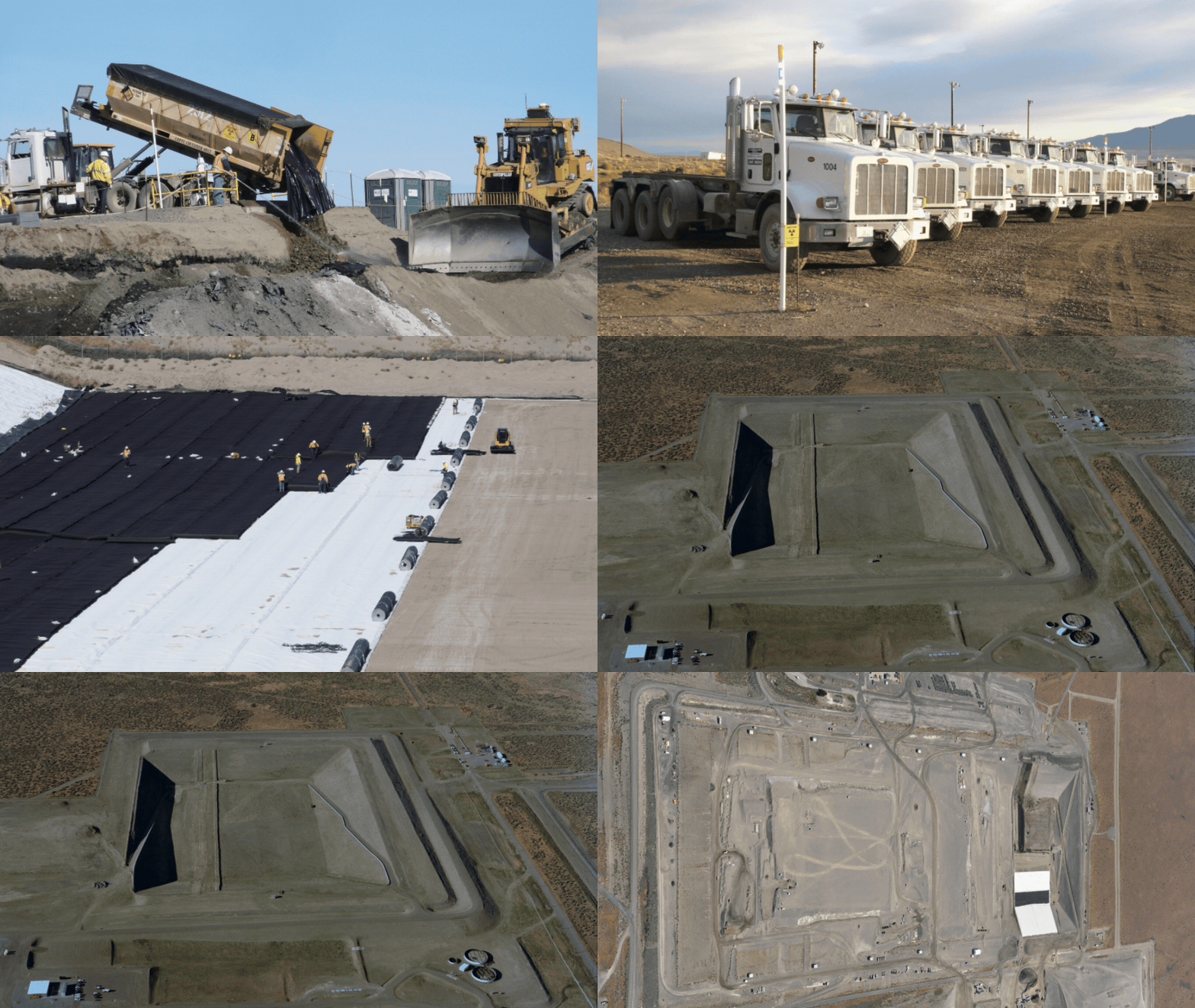
ERDF workers transport cleanup waste for permanent disposal at the Hanford Site. Since 1996, crews have logged more than 30 million safe miles moving more than 19 million tons of waste.
Image courtesy of the U.S. Department of Energy Office of Environmental Management.
For 30 years, the Environmental Restoration Disposal Facility (ERDF) has played an important role in cleanup at the Hanford Site.
ERDF opened in 1996 as an engineered landfill designed to provide a permanent disposal location for certain wastes generated during Hanford cleanup. Three decades later, the 107-acre facility has received more than 19 million tons of low-level radioactive, hazardous and mixed solid waste from cleanup projects across the site.
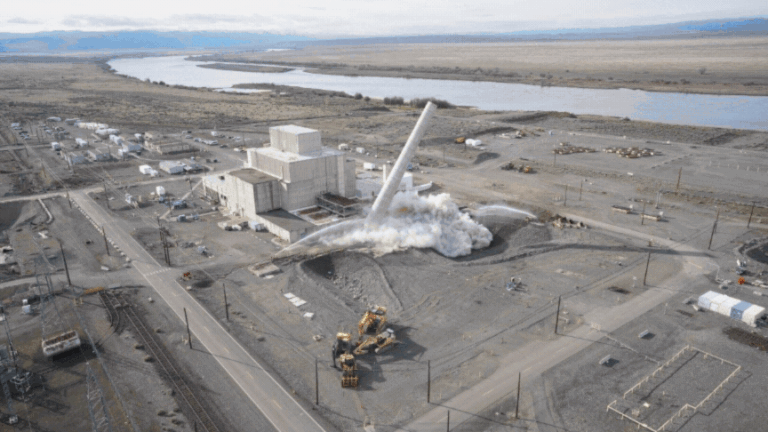
The facility has supported cleanup work ranging from demolition of aging buildings to removal of contaminated soil and other solid material.
What goes to ERDF?
Located near the center of the 580-square-mile Hanford Site on the Central Plateau, ERDF’s role is specific. It accepts low-level radioactive, hazardous and mixed solid waste generated during Hanford cleanup activities. It is not the disposal destination for all types of Hanford waste.
That distinction is important as multiple waste-management systems operate across the site. For example, Hanford’s tank-waste mission involves separate storage, treatment and disposal pathways.
ERDF was instead designed to support environmental restoration work such as facility demolition, removal of contaminated soil, and cleanup of waste sites across the Central Plateau and River Corridor.
Thirty years by the numbers
Since facility operations began in 1996:
- More than 19 million tons of cleanup waste have been disposed of at ERDF.
- Waste has come from more than 800 demolished facilities and approximately 1,300 waste sites.
- Truck drivers supporting ERDF have logged more than 30 million safe transportation miles.
DOE notes that 30 million transportation miles is roughly equivalent to circling the Earth 1,200 times.
Designed to protect the environment
ERDF includes an engineered liner system with multiple layers designed to collect water from precipitation, snowmelt and dust-control activities. That water is directed to holding tanks for treatment rather than being allowed to move through the disposal area into groundwater.
Those engineered controls allow ERDF to provide a regulated disposal location while supporting cleanup work throughout Hanford.
Growing with the mission
ERDF was designed so that additional disposal capacity could be added as Hanford cleanup progressed.
The facility has been expanded several times since opening, with previous additions completed in 1999, 2003, 2007 and 2011.
Another major expansion is now underway.
Construction of Super Cell 11 is expected to add approximately 2.8 million cubic yards of disposal capacity. The new cell is about 80 feet deep, 500 feet wide and 1,000 feet long. DOE has said the added capacity is intended to support continued Hanford cleanup roughly through 2040.
Supporting cleanup across Hanford
ERDF is one part of a much larger Hanford waste-management system, but its role has remained consistent for three decades.
By providing a permanent disposal location for qualifying cleanup waste, the facility allows contaminated soil, demolition debris and other solid material to be removed from cleanup areas and managed in a centralized engineered facility.
The Super Cell 11 expansion will add disposal capacity for cleanup projects expected in the years ahead. For the Tri-Cities, ERDF is part of the infrastructure that makes continued Hanford cleanup possible. Planned expansion will help ensure that qualifying waste from future cleanup projects has a permanent disposal pathway.