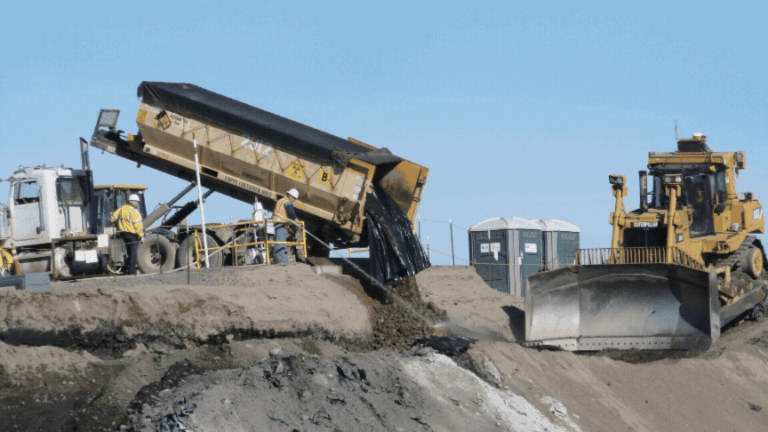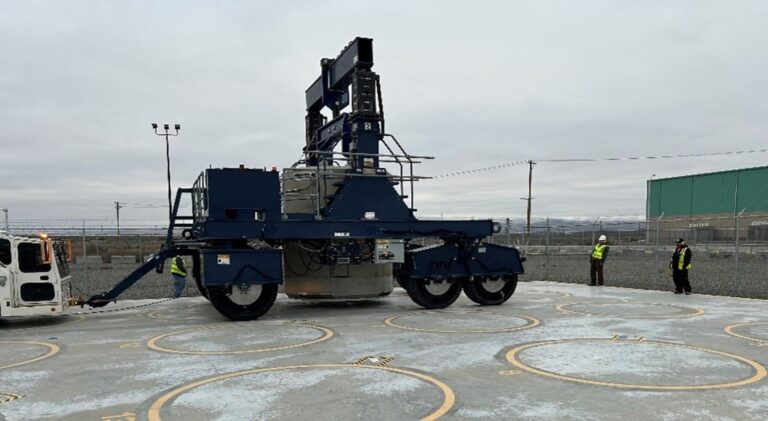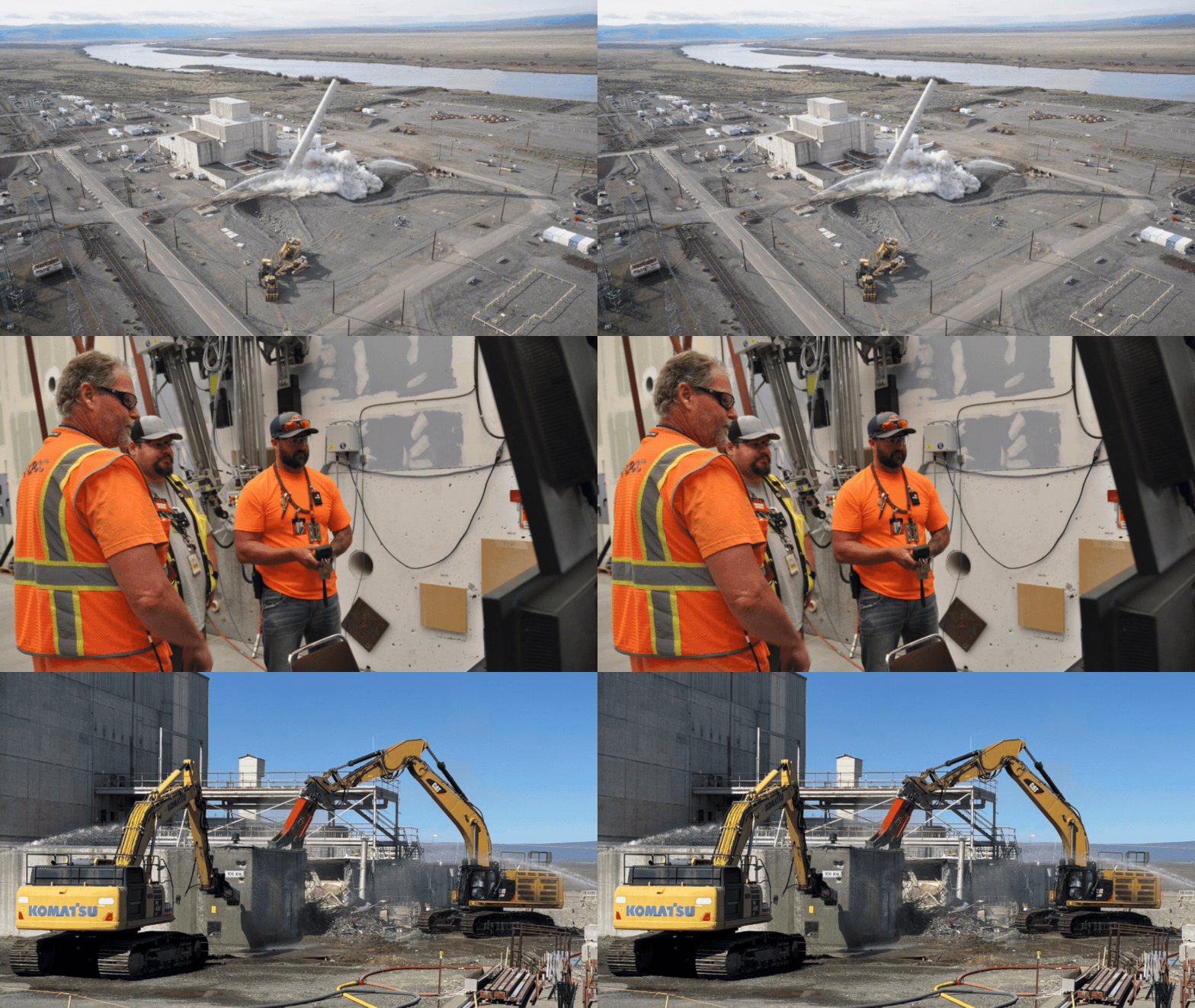
Demolition and cleanup work at the Hanford Site includes projects addressed by a new milestone framework adopted by DOE and its regulatory partners. Courtesy of the U.S. Department of Energy Office of Environmental Management.
Cleanup at the Hanford Site is a decades-long effort involving thousands of projects, changing site conditions and billions of dollars in federal investment. Keeping that work moving requires cleanup schedules that reflect current conditions, priorities and available resources.
A new planning framework adopted by the U.S. Department of Energy, U.S. Environmental Protection Agency and Washington State Department of Ecology is intended to do just that.
The three agencies recently finalized a new series of milestones under the Tri-Party Agreement, the regulatory framework that has guided much of Hanford cleanup since 1989. The new approach replaces several older sets of cleanup deadlines with a more integrated structure for addressing contaminated soil, groundwater and legacy facilities.
For Hanford Communities, the change represents an important opportunity to more closely align cleanup commitments with current risks and expected funding levels, with an emphasis on safely expediting Hanford cleanup.
Moving from long-range assumptions to near-term commitments
Hanford cleanup plans have historically included milestones established years — and sometimes decades — in advance. Over time, some of those long-range milestones became outdated and no longer reflected current timelines and priorities.
DOE and its regulators began discussing a more adaptive approach several years ago after recognizing that some long-range TPA milestones no longer aligned with site conditions. Formal negotiations began in 2024, followed by release of a tentative milestone package for public comment in 2025.
Under the framework finalized this year, the agencies will meet annually to evaluate progress, update schedules and establish near-term enforceable deadlines based on available funding and program needs. A more comprehensive review every five years will help guide longer-range planning.
Why flexibility matters at Hanford
Hanford is one of the nation’s largest and most complex environmental cleanup efforts.
Work ranges from treating radioactive tank waste and remediating contaminated groundwater to removing aging facilities and addressing contaminated soil across hundreds of square miles. Conditions can change as cleanup progresses, new information becomes available or technologies improve.
A planning system that responds to those changes can help align cleanup schedules with current priorities, conditions, available funding and program needs.
Hanford Communities has long supported risk reduction as a central cleanup priority and has advocated for safe and efficient cleanup approaches. It also supports continued coordination between DOE, regulators, Tribal Nations and other stakeholders on cleanup priorities, technologies and regulatory approaches.
The new milestone framework is consistent with that emphasis on risk reduction and coordinated cleanup planning.
Accountability still matters
The effectiveness of the new approach will depend on whether it supports measurable cleanup progress.
The first enforceable milestone under the new framework provides an early example. Hanford completed demolition of the 116-KW exhaust stack in the 100 K Area several months ahead of schedule, according to DOE.
Future progress can also be evaluated by the work completed and risks reduced.
Regular schedule reviews should also help the agencies identify emerging challenges and adjust future schedules as site conditions change.
What this means for the Tri-Cities
Hanford cleanup has direct implications for the communities that surround the site.
Cleanup decisions affect protection of the Columbia River and groundwater, the regional workforce, federal cleanup funding and the long-term future of the Hanford Site.
Hanford Communities works with federal and state agencies, Tribal Nations and local leaders to advocate for cleanup priorities that protect public health and the environment while supporting timely, achievable progress. Those priorities include tank waste treatment, groundwater cleanup, removal of high-risk facilities and sustained environmental monitoring.
The new planning framework creates another opportunity to keep those priorities at the forefront as schedules are reviewed and future milestones are established.
After nearly four decades under the Tri-Party Agreement, the new framework is intended to provide a more adaptable approach to cleanup scheduling while maintaining clear expectations and accountability.
Hanford Communities is hopeful that this new approach will translate into safely expediting cleanup work in the years ahead.